Closing Velocity: Why the Best AEs Send Less Email
The counter-intuitive pattern in our top-quartile performer data.
When we first looked at activity data across the top 25% of AEs in our customer base, the result was confusing.
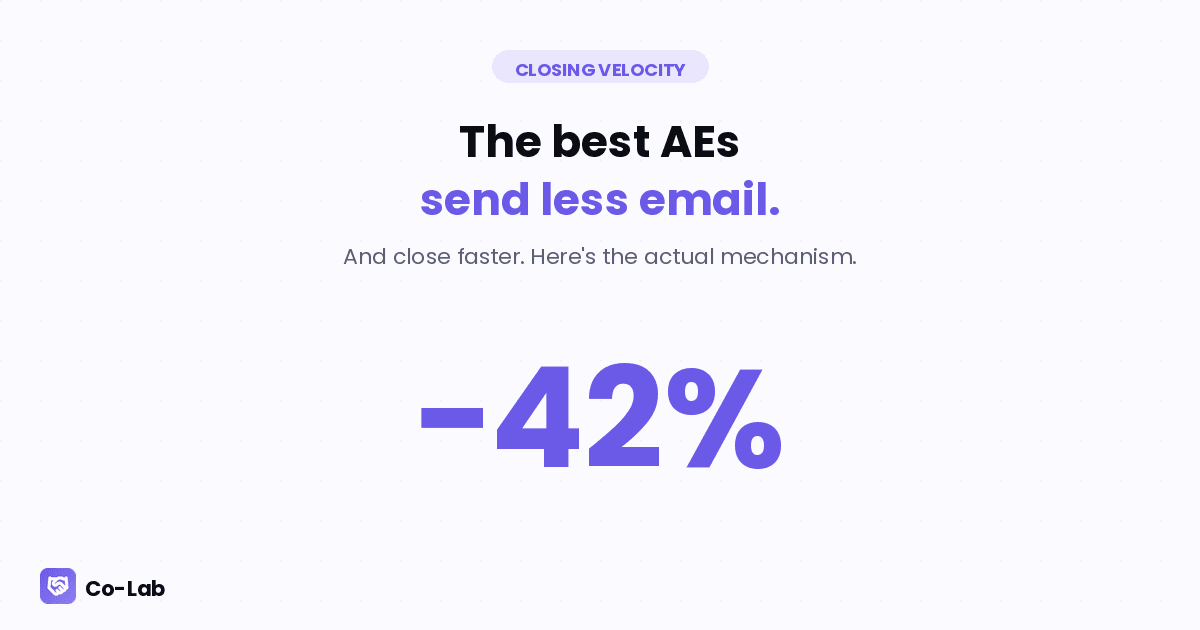
Top performers sent 42% fewer emails per deal than the average AE. Their deals closed faster. Their close rates were higher. Their email volume was lower.
This contradicts every "high-velocity sales" playbook ever written. The standard advice is: more activity, more touches, more emails, more close. The data said the opposite.
Here's what the top performers were actually doing.
They consolidate touches into single artifacts
The average AE sends 3-4 follow-up emails after a discovery call: the recap, the deck, the case study, the calendar link.
The top performer sends one email containing one deal-room link. The link contains all four artifacts plus more. The buyer gets the same content with one-quarter the inbox volume.
Result: same content delivered, less inbox friction, faster review.
They wait for buyer activity before re-touching
The average AE checks in every 2-3 days regardless of whether the buyer has done anything.
The top performer waits for a signal — a deal-room re-visit, a forward to a new stakeholder, a question — and then responds to that signal.
Result: every touch is contextual. The buyer never gets a "just checking in!" email that adds zero value. Every email lands when there's a reason to send it.
They use async patterns to replace sync calls
The average AE schedules a follow-up call for every objection. Each follow-up call generates 2-3 surrounding emails (calendar tag, agenda, prep material).
The top performer addresses objections with deal-room updates and inline responses. Three sync calls collapse into zero, eliminating the surrounding email churn.
Result: deal cycles compress because async resolution is faster than scheduling sync resolution.
They write longer emails when they do write
When the top performer does send an email, it's substantive. 200-400 words, multiple specific points addressed, often with a question that requires a substantive reply.
The average AE sends short emails frequently. "Just wanted to check in!" "Following up on this." "Bump."
Result: the buyer treats the top performer's emails as work-grade communications. The average AE's emails get acknowledgment-level responses ("got it, thanks!") that don't move the deal.
The mechanism: signal over noise
Stepping back, the pattern is consistent: top performers prioritize signal density over touch volume.
Every interaction with the buyer should advance the deal. A "just checking in" email doesn't advance the deal — it's a signal-zero touch. The average AE sends these because their CRM tells them to ("no activity in 4 days, send a touch"). The top performer ignores that prompt.
The result over a quarter: top performer sends fewer total emails but each email moves the deal. Average AE sends more emails but most don't move anything. Math: top performer's pipeline moves faster.
How to operationalize
1. Replace activity-based touch reminders with signal-based ones.
Instead of "no activity in 4 days, send touch," set up "buyer opened deal room twice in last 24 hours, send personalized response."
The trigger isn't time-since-last-AE-action. The trigger is new buyer behavior.
2. Set a minimum email length for follow-ups.
If your AEs are sending 1-line "just checking in" emails, kill the practice. Mandate a minimum of 100 words per outbound. Most "just checking in" emails won't survive that bar — which is the point.
3. Audit your AEs on signal-density, not activity-volume.
In pipeline reviews, sort AEs by close rate per email sent. The high-ratio AEs are doing it right. The low-ratio AEs are sending noise.
This metric reframes "more activity" from a virtue into a symptom — usually of an AE who's compensating for low-quality engagement with high-quality volume.
What this means for your team
If your sales team's North Star is "more touches per deal," you're optimizing for the wrong thing. You're probably also burning out your AEs and annoying your buyers.
Reframe the metric: signal per touch. Reward AEs who close deals with fewer, better emails. Penalize the noise.
The top quartile pattern reproduces consistently across teams that adopt this. The 42% reduction in email volume isn't a top-down mandate — it's what naturally happens when you reward signal over volume.
Your buyers will thank you. Your AEs will close more. Your CRM activity dashboards will look strange to anyone who hasn't internalized the shift.
That's how you know it's working.
Want signal-based sales triggers instead of activity-based ones? Co-Lab pipes deal-room engagement signals into Slack and CRM. Free at colabapp.ai, code SALES for 3 months.
More from the blog
Keep reading.
The Hidden Cost of the "Quick Sync" Call
Why every "let's set up a quick call" is a 3-day deal delay — and what to do instead.
Multi-Threaded Selling Without Burning Your Champion
How to bring more contacts into a deal without making your champion feel circumvented.
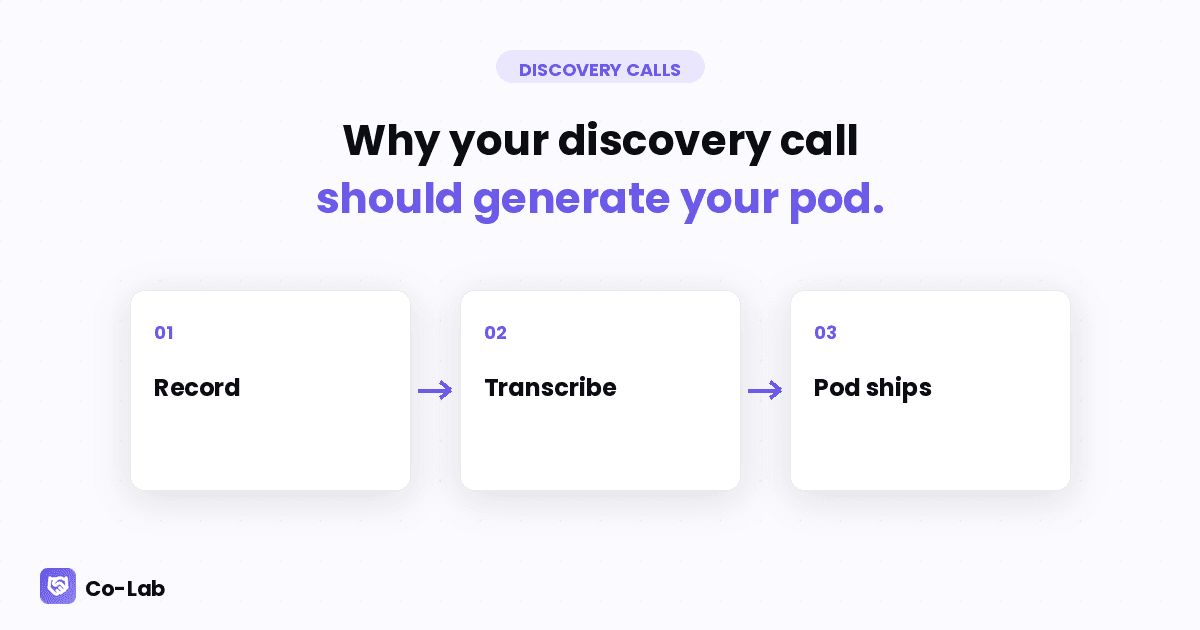
Why Your Discovery Call Should Generate Your Pod
Treating the discovery call as the input to the deal room — not as a separate event followed by a manual write-up.