Why Your Discovery Call Should Generate Your Pod
Treating the discovery call as the input to the deal room — not as a separate event followed by a manual write-up.
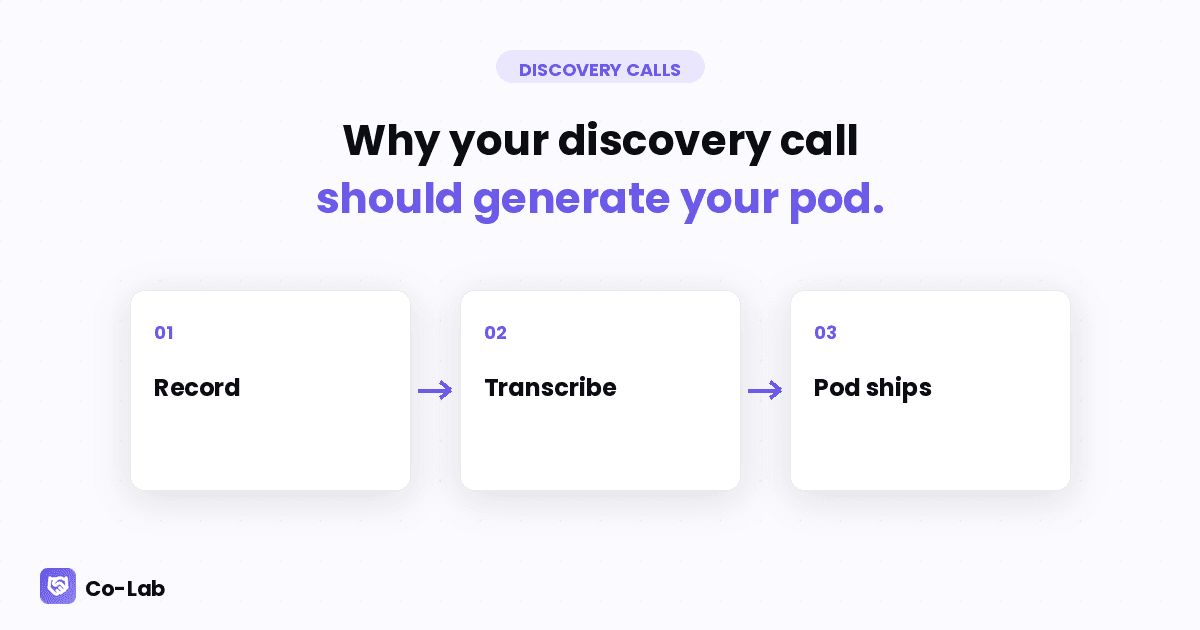
The standard model: discovery call happens, AE takes notes, AE later writes the follow-up artifacts (recap email, deck, deal room) by hand from those notes.
This model treats the discovery call as a meeting and the follow-up as separate work. That separation is the source of most of the friction in B2B sales follow-up.
The new model treats the discovery call as the raw material and the follow-up as automatic processing of that material. Same call, different downstream behavior.
What changes when you treat the call as input
The AE listens differently. When you know the transcript will become the deal room, you ask better questions. You let the buyer talk longer because their words become the artifact. You stop scribbling notes (the transcript captures everything) and start being present in the conversation.
The follow-up ships in minutes, not days. The deal room is built from the transcript by AI. The AE reviews, customizes the last 20%, and ships within 30 minutes of the call ending.
The buyer feels heard. The artifact references their actual words. Not a summary in your voice — a recap that quotes them. The trust signal is enormous.
The internal handoff becomes seamless. When CS or SE inherits the deal later, they have the original transcript, the deal room, and the engagement data. No "what did sales tell them?" gap.
The new discovery call structure
Adapted for the transcript-as-artifact model:
Minute 0-5: Set context. Brief intro on you and Co-Lab. Agenda for the call. Permission to record.
Minute 5-25: Discover. Open questions. Let the buyer talk. Resist the urge to pitch. Every minute of buyer talk-time is content for the deal room.
Minute 25-45: Demonstrate. Show specific things based on what they said in the discovery section. Not a generic demo. ("You mentioned X — here's how that would look in our tool.")
Minute 45-55: Discuss next steps. Verbal MAP — "what would need to happen for this to be a yes?" Their words become the auto-generated MAP.
Minute 55-60: Confirm + close. "I'll send you a deal room within the hour with everything we discussed." Set the expectation.
The structure isn't dramatically different from a great discovery call. The difference is awareness — every section becomes content for the artifact.
The 30-minute window
The most important window in the new model: the 30 minutes after the call ends.
Old model: AE has the next call at the top of the hour. The follow-up gets pushed to "this afternoon" or "tomorrow." It happens late, if at all.
New model: AE drops the transcript into the deal-room generator within 5 minutes of the call ending. AI builds the room in 90 seconds. AE customizes for 10 minutes (welcome copy, case study selection, MAP date adjustments). Pod link sent at minute 25.
That timing change is what compresses the deal cycle. The buyer opens the link while the call is still fresh. Energy doesn't decay. The deal moves.
What you ask differently
Three discovery questions that become higher-leverage in this model:
1. "Walk me through your current workflow."
Open-ended. The buyer narrates their actual process. The transcript captures it. The deal room's recap block can quote their exact framing. ("Currently, your team is spending 4 hours per Friday on this — the kiosk replaces that hour with 5 minutes.")
2. "What's already failed when you've tried to solve this before?"
Surfaces the dead vendors, the internal builds that didn't ship, the workarounds that don't scale. This becomes the "why we're different" frame in the deal room — addressing the specific failures they named.
3. "Who else needs to weigh in on this?"
Names the stakeholders. The names go directly into the MAP and the contact list. Multi-threading becomes structural, not optional.
The old discovery call asked these questions too — but the answers were captured in scribbled notes and then summarized away. The new model preserves the buyer's exact language and uses it.
What you don't ask anymore
Some discovery questions become unnecessary because the AI infers them:
- "What's your timeline?" — usually answered indirectly by the buyer in passing; AI catches it
- "What's your budget?" — buyers rarely answer this directly anyway; pricing-block engagement tells you more
- "What other vendors are you looking at?" — usually mentioned passively; AI flags the mentions
You can still ask these if you want, but the AI will surface them from the conversation regardless. The discovery call becomes about quality of conversation, not information extraction.
What this means for your team
If your AEs are spending 60 minutes on discovery and then 4 hours on the artifacts that follow, you have an inverted ratio. The artifacts should take 30 minutes; the conversation should be the work.
Reframe the discovery call: it's not a meeting that produces notes. It's an interview that produces a buyer-facing artifact.
The AEs who internalize this shift outperform on close rate within a quarter. Their follow-ups land in 30 minutes instead of 30 hours. The buyer notices.
Want to turn discovery call transcripts into deal rooms automatically? Co-Lab does this directly from your call recording. Free at colabapp.ai, code SALES for 3 months.
More from the blog
Keep reading.
The Hidden Cost of the "Quick Sync" Call
Why every "let's set up a quick call" is a 3-day deal delay — and what to do instead.
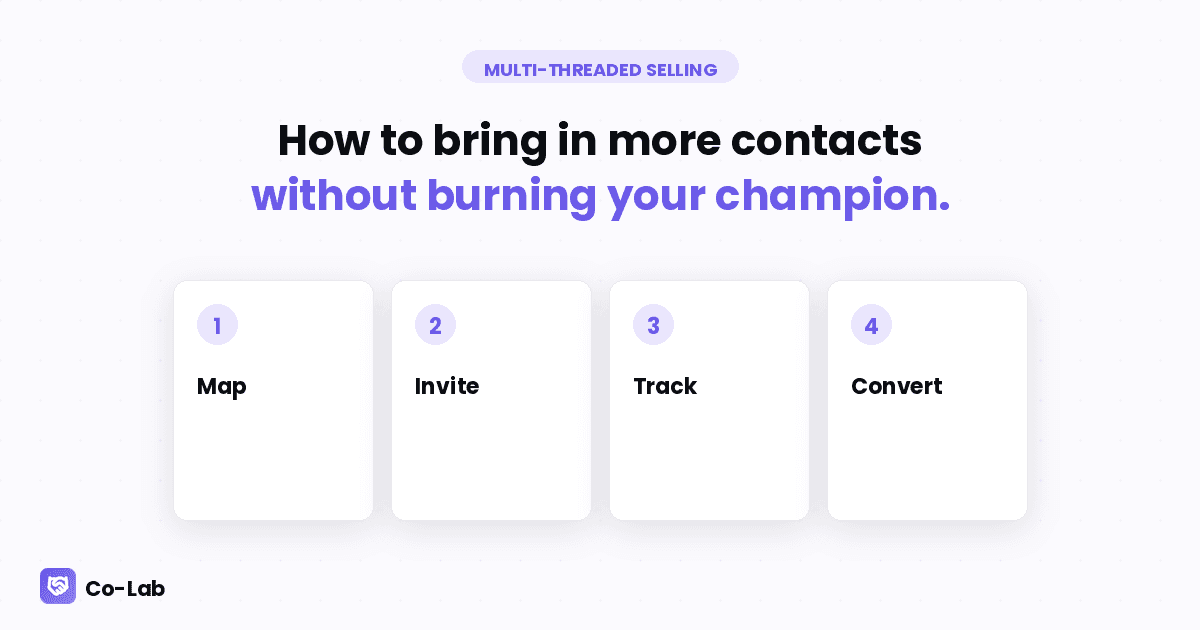
Multi-Threaded Selling Without Burning Your Champion
How to bring more contacts into a deal without making your champion feel circumvented.
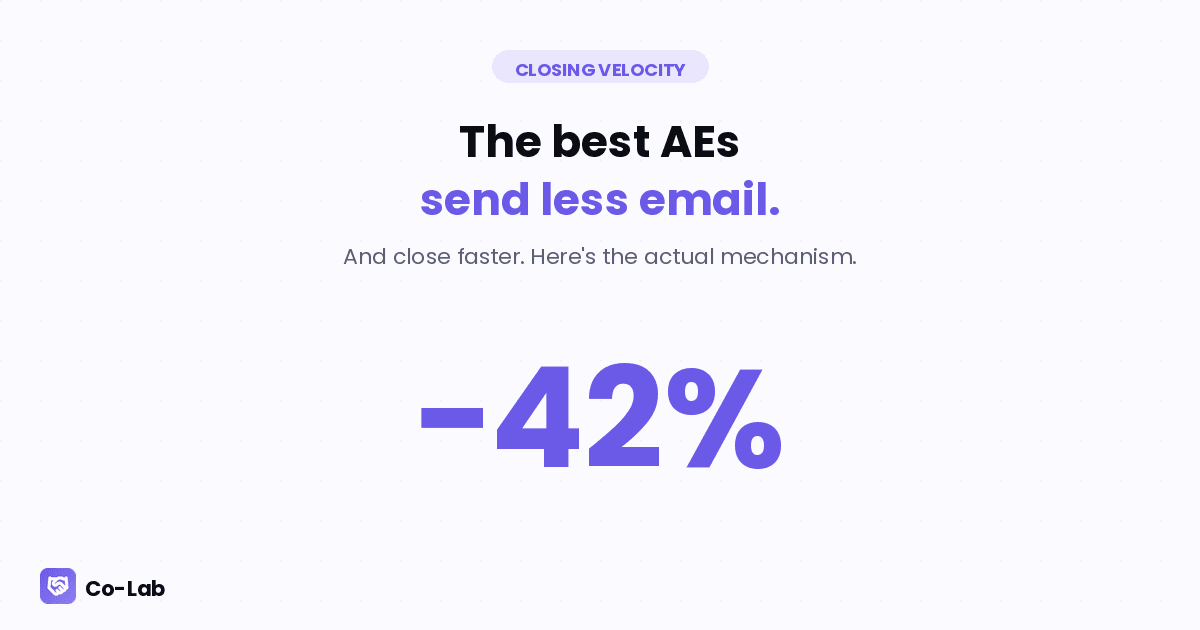
Closing Velocity: Why the Best AEs Send Less Email
The counter-intuitive pattern in our top-quartile performer data.