Multi-Threaded Selling Without Burning Your Champion
How to bring more contacts into a deal without making your champion feel circumvented.
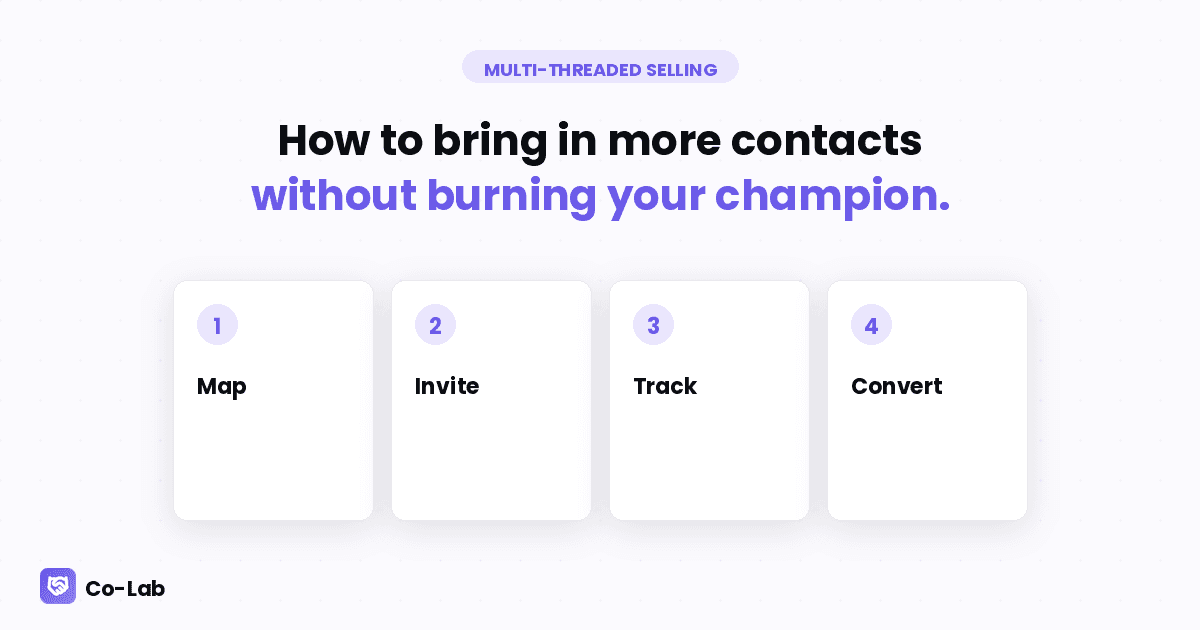
The data on multi-threaded deals is unambiguous: deals with 3+ contacts on the buyer side close at roughly 2-3x the rate of single-threaded deals. Sales leadership knows this. Sales coaches preach it. Methodologies require it.
The problem: aggressive multi-threading often burns the champion. They feel circumvented. They go silent. The deal you were trying to expand actually contracts.
Here's how to multi-thread without that backlash.
The mistake: going around the champion
The default multi-threading move: AE finds the buyer's CFO on LinkedIn, sends a cold email "I noticed our team is talking to [Champion]. Wanted to make sure you have everything you need."
The CFO forwards the email to the champion. The champion is now embarrassed. They didn't want their CFO contacted directly. They feel undermined. The deal stalls.
This happens because the AE prioritized the multi-threading metric over the champion's political standing.
The fix: multi-thread with the champion, not around
Frame every new-contact ask as a request for the champion to make the introduction, not as a direct outreach.
The script:
"[Champion] — would it make sense to loop in [name from CFO's office] before we get to the proposal? Happy to put together a 1-page summary for them, or do you want to handle the introduction?"
This script does three things:
- Surfaces the multi-threading goal transparently
- Gives the champion control over the timing and the framing
- Offers to do the work of preparing the contact (the 1-page summary)
If the champion says "yes, let me introduce you," they own the political move. If they say "actually, let me hold off on that for now," you've learned the political landscape. Either way, you're not going around them.
When the champion says no
Sometimes the champion says "actually, I don't want to bring in [stakeholder] yet." This is the moment most AEs make the wrong move — they push.
Don't push. The champion has internal political knowledge you don't. They might be telling you that the CFO is in a bad mood this quarter, that procurement is overloaded, that the technical lead has competing priorities. Trust them.
Ask the diagnostic question: "Got it. What would need to change for that introduction to make sense?"
The answer tells you what to do next. Sometimes it's "wait two weeks." Sometimes it's "we need to solve [specific objection] first." Sometimes it's "honestly, this deal isn't going to involve them — they don't have a vote."
The four contacts that matter most
In B2B SaaS deals, the four highest-leverage contacts to multi-thread are:
1. The economic buyer (CFO, VP, anyone with budget signoff). Without them, no deal closes.
2. The technical buyer (the person who will use the API, the integration owner). Without them, the eval stalls.
3. The champion's manager (one level above the champion). Without them, the deal lacks executive air cover.
4. The end user (whoever actually uses the product day-to-day). Without them, adoption fails post-sale.
You don't need to multi-thread all four. You need the right two for the deal stage:
- Early stage: champion + end user (so the champion can say "I talked to my team, they want this")
- Mid stage: champion + technical buyer (so the integration question gets answered)
- Late stage: champion + economic buyer (so the budget question gets resolved)
Multi-threading isn't about volume. It's about the right additional contact at the right stage.
The deal-room as multi-thread enabler
Here's where the artifact matters. A deal-room URL is easy to forward. An email thread is hard to forward.
When you ask the champion to introduce a new stakeholder, the friction of doing so is roughly proportional to the work of explaining context. If your champion has to write a 5-paragraph email summarizing the deal to date, they probably won't.
If they can just forward your URL with one line ("hey, this is the team I've been talking to about X — take a look when you have a sec"), they probably will.
The deal room reduces the activation energy of internal forwards. That's not a small thing — it's the actual mechanism that makes voluntary multi-threading happen.
When you have to go direct
Sometimes the champion is too junior, too overwhelmed, or politically blocked from making the introductions you need. In those rare cases, going direct is acceptable, but only with explicit acknowledgment.
The script:
"[Champion] — I know we talked about looping in [stakeholder] later, but [reason: timing pressure / specific objection]. I want to send them a quick note directly. Want to weigh in on the messaging first, or are you good with me reaching out?"
You're still putting the champion in the loop. You're still asking permission. But you're owning the move because the timing requires it.
This works occasionally. It backfires if you do it more than once per deal.
What this means for your team
Most AE multi-threading training emphasizes the metric (number of contacts) over the mechanism (who initiates the contact, how they frame it).
Reframe the training around the political move. The multi-threading number isn't the goal — it's a side effect of doing this well. Champions who feel respected in the process introduce more stakeholders, not fewer.
Track the ratio: "Champion-initiated introductions vs. AE-initiated cold contacts." Push toward 70%+ champion-initiated. Watch your multi-threaded deal count grow without the political backfires.
Want a deal room that's easy for champions to forward? Co-Lab's URL-based artifacts are built for it. Free at colabapp.ai, code SALES for 3 months.
More from the blog
Keep reading.
The Hidden Cost of the "Quick Sync" Call
Why every "let's set up a quick call" is a 3-day deal delay — and what to do instead.
Closing Velocity: Why the Best AEs Send Less Email
The counter-intuitive pattern in our top-quartile performer data.
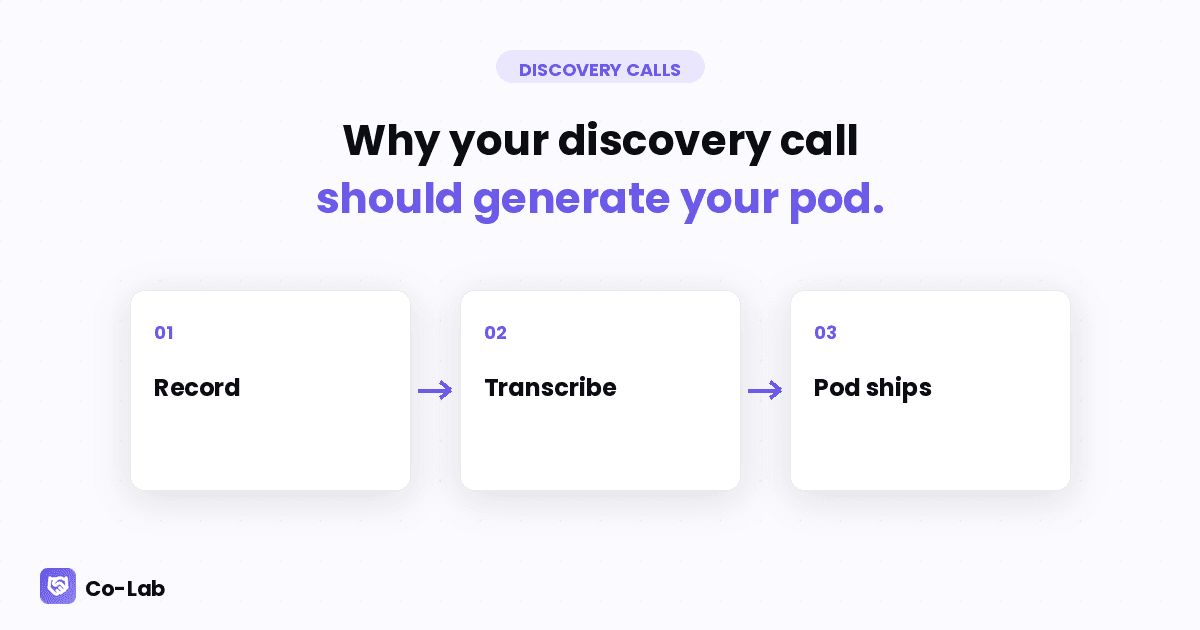
Why Your Discovery Call Should Generate Your Pod
Treating the discovery call as the input to the deal room — not as a separate event followed by a manual write-up.