The Hidden Cost of the "Quick Sync" Call
Why every "let's set up a quick call" is a 3-day deal delay — and what to do instead.
In B2B sales, the most innocuous-sounding phrase is also the most expensive: "let's set up a quick sync."
It sounds collaborative. It feels productive. It's almost always the wrong move.
Here's the actual cost, and the async pattern that replaces it.
The cost of one "quick sync"
A typical quick-sync between an AE and a champion takes:
- ~15 minutes of calendar negotiation back-and-forth
- ~3 calendar reschedules across busy weeks
- ~7 days of elapsed time before the call actually happens
- 30 minutes of the actual call
- 15 minutes of post-call recap and follow-up
Total elapsed time from "let's set up a quick sync" to "issue resolved": 7-10 days.
Total active work: ~70 minutes spread across both parties.
That's per sync. A typical late-stage deal involves 3-4 of these. Net deal-cycle impact: 21-30 days of unnecessary delay across the average late-stage opportunity.
Why we keep doing it
Three reasons, in order of how often they're the real driver:
1. The relationship reflex. AEs default to calls because calls feel high-touch. The thinking is "if I make this a call, the buyer feels we care." Sometimes true. Often misplaced — the buyer also has 8 calls today.
2. The "we need real-time" reflex. AEs assume complex topics need synchronous discussion. Often false. A complex topic needs a written response the buyer can read and re-read. Real-time is for negotiation, not exposition.
3. The "I don't know how to write it down" reflex. Sometimes the AE schedules the call because they don't know how to articulate the answer in writing. The call is a way to think out loud. This is the worst reason and the most common.
The async replacement pattern
The pattern: when you'd normally schedule a "quick sync," instead create a deal-room block specifically addressing the topic.
Step 1: Identify the topic. ("They have concerns about implementation timeline.")
Step 2: Write a 200-word response addressing the concern. Be specific — name the implementation steps, the typical timeline, the customer who did it in 6 weeks.
Step 3: Add 1-2 supporting links. The implementation case study. The customer reference quote.
Step 4: Add the new block to the deal room. Send a one-line note: "Added a section addressing the implementation question — same link as before. Take a look when you have a sec."
Total elapsed time from "topic raised" to "answer delivered": 30-60 minutes (vs. 7-10 days for a sync call).
Total active work: 20 minutes for the AE, 5 minutes for the buyer. Net work: ~25 minutes (vs. ~70 minutes for a sync call).
The buyer reads it on their schedule. They forward it to anyone else who needs to see it. They reply with follow-up questions inline. The deal moves.
When sync calls do win
Three legitimate uses for the sync call:
1. Negotiation. Real-time give-and-take on terms. You can't async a contract redline back-and-forth that takes 4 cycles of "what if we did X" responses.
2. Trust-building moments. First call with a new champion. Close call with the economic buyer. Renewal kickoff. The relationship signal of "I'll take 30 minutes for you" matters here.
3. Crisis recovery. A deal that just went sideways needs a relationship reset that only a real conversation can do.
That's the list. Three uses. Everything else — answering questions, addressing objections, walking through case studies, reviewing the proposal — is faster and better as async.
How to retrain the reflex
The hardest part isn't the pattern. It's the cultural shift.
Sales leaders typically reward call activity. "Sets booked" is a metric on most teams. AEs are conditioned to schedule calls because that's what gets celebrated.
Three changes to the cultural setup:
1. Track time-to-answer, not calls-booked. Reward AEs whose buyers get their questions answered fastest, regardless of medium.
2. Make async responses visible. In pipeline reviews, surface the deal rooms with substantive recent updates. "Look how Sarah resolved the integration question in 30 min — no call needed" is the lesson.
3. Stop counting calls as activity. Activity that doesn't move the deal isn't activity. Calls that could have been emails are activity-zero. Don't reward them.
The buyer-side lift
The unspoken benefit: buyers prefer this.
Buyers in 2026 are calendar-saturated. Every avoided sync call from your side is a buyer who feels respected — "this AE didn't take 30 min of my time when 10 min of reading would have done it."
Customer feedback on async-heavy sales motions consistently rates higher than call-heavy ones. Buyers don't articulate it as "I prefer async" — they articulate it as "the sales process was easy" or "they didn't waste my time." Both are coded language for "you respected my calendar."
Calendar respect compounds. Buyers who feel their time is respected during the sales cycle convert at higher rates. The async pattern isn't just operationally cheaper — it's also a buyer-experience advantage.
What this means for your team
Audit one quarter. Count how many "quick sync" calls happened across your active pipeline. Estimate the elapsed time delay each one cost.
The number is bigger than you think. For most teams, 30-50% of late-stage calendar time is sync calls that could have been async resolutions.
Replace half of them with deal-room blocks this quarter. Watch your time-to-close compress without increasing AE headcount.
The "quick sync" feels productive. The data says it isn't. The async replacement is faster, better-received, and free.
Want async-friendly deal rooms with inline comments? Co-Lab supports threaded buyer questions inside any block. Free at colabapp.ai, code SALES for 3 months.
More from the blog
Keep reading.
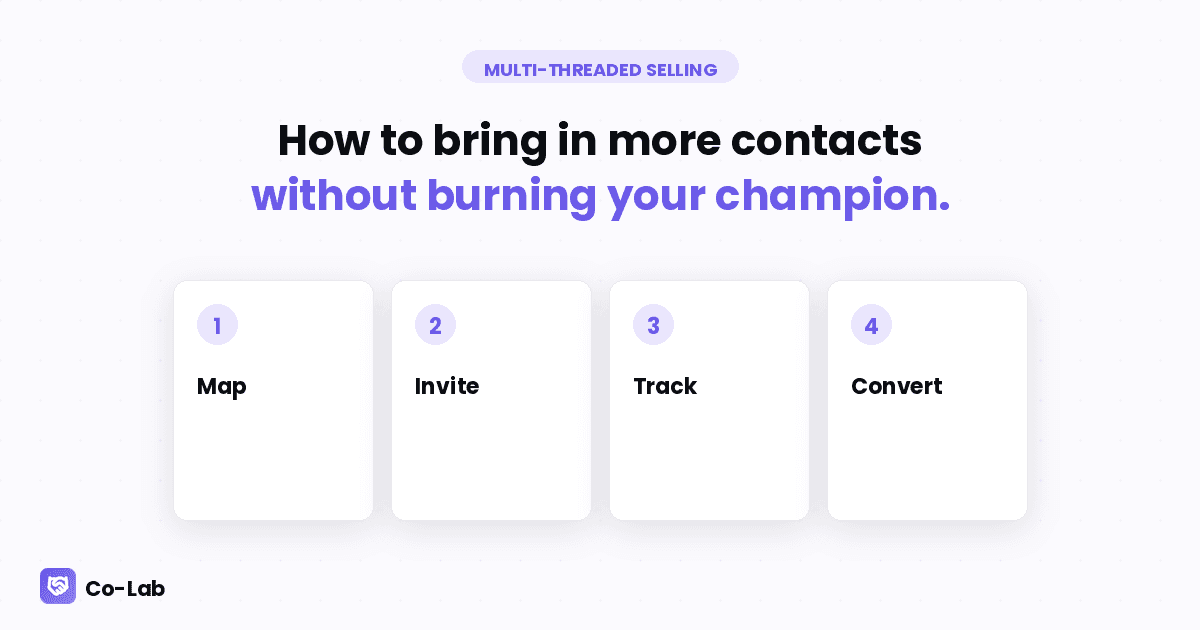
Multi-Threaded Selling Without Burning Your Champion
How to bring more contacts into a deal without making your champion feel circumvented.
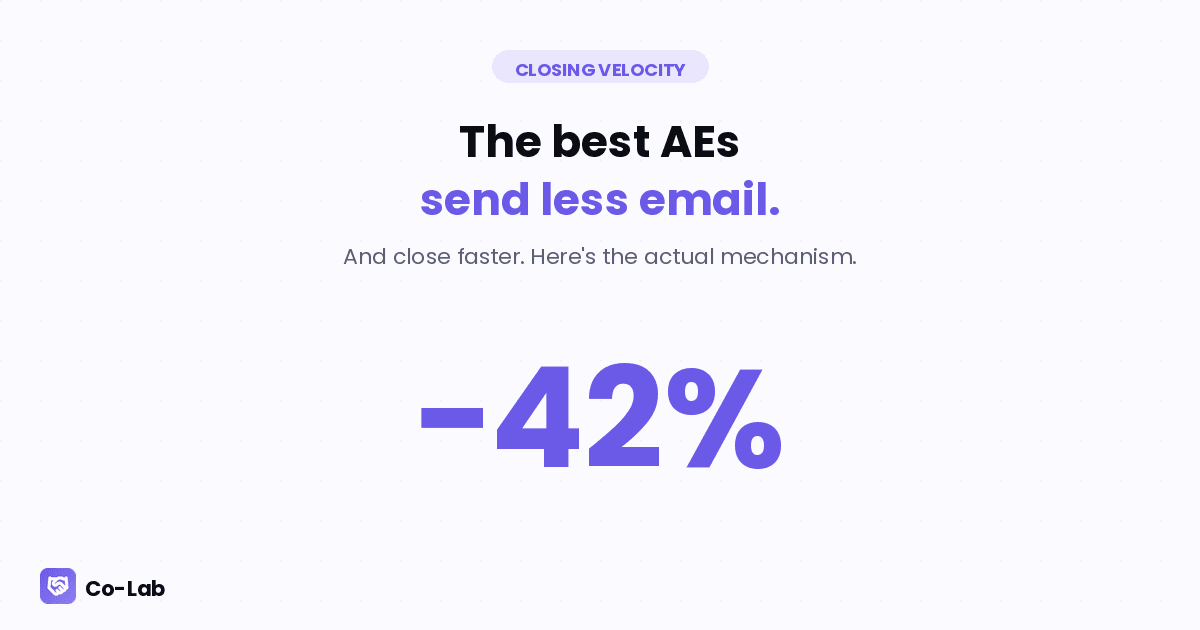
Closing Velocity: Why the Best AEs Send Less Email
The counter-intuitive pattern in our top-quartile performer data.
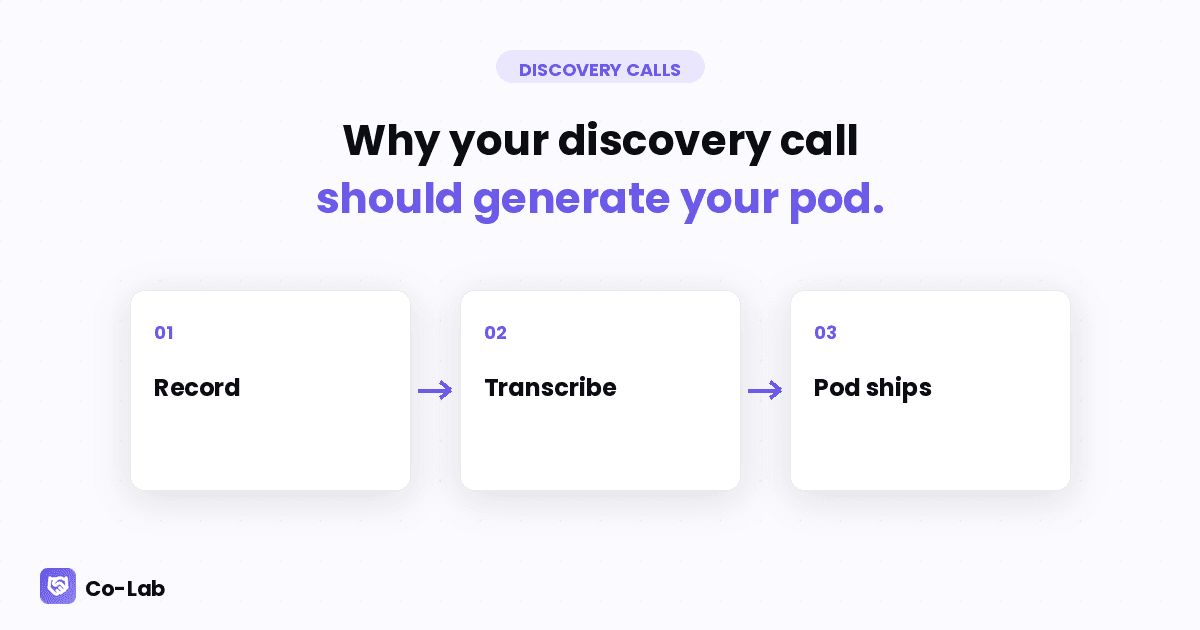
Why Your Discovery Call Should Generate Your Pod
Treating the discovery call as the input to the deal room — not as a separate event followed by a manual write-up.