Stalled Deals: 6 Engagement Signals You Missed Before It Went Cold
The signals that show up 7-14 days before a deal officially stalls — and what to do when you see them.
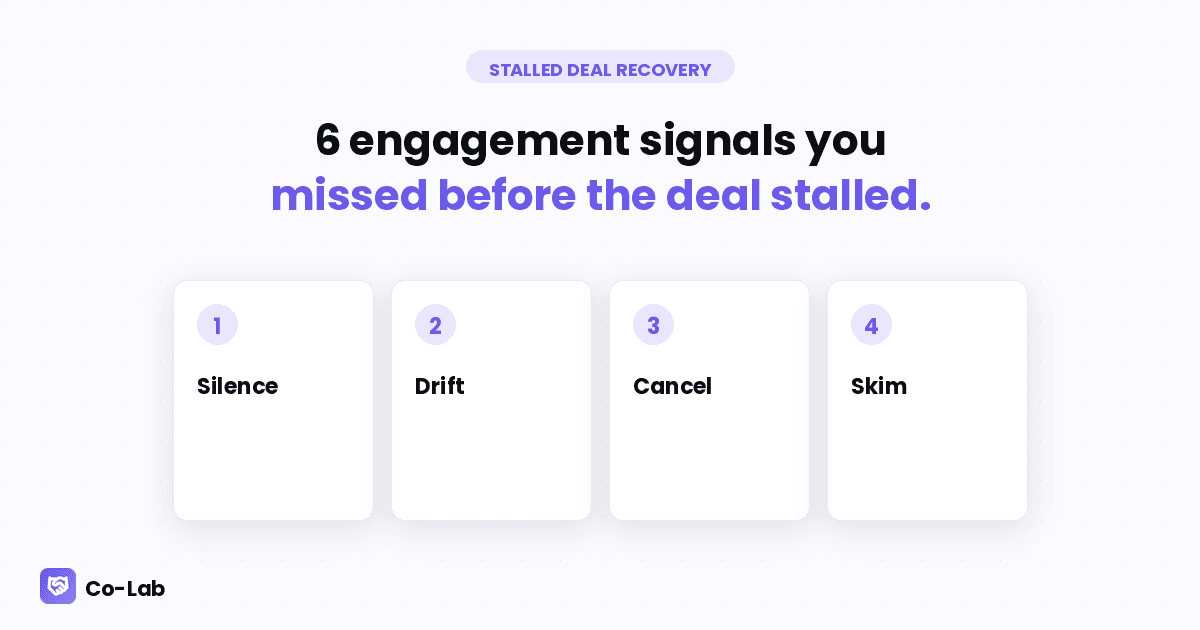
A deal doesn't go cold all at once. It goes cold gradually, in patterns that show up before the rep notices.
The rep notices when the buyer stops replying. By then, the deal has been dying for two weeks. The signals that predicted it were there 14 days earlier, in the engagement data nobody was watching.
Here are six signals that show up before a deal officially stalls.
1. Drop in re-visit frequency
The pattern: your champion was opening the deal room 2-3 times per week. This week, they opened it once. Next week, they didn't open it at all.
Why it predicts: active deals have ongoing internal conversations. Champions re-open the deal room to reference it for those conversations. When the conversations stop, so do the re-opens.
What to do when you see it: within 48 hours of the drop, send a one-line message: "Anything from your end I can answer or unblock?" If they don't respond within 72 hours, the deal is in trouble and you need to escalate.
2. Champion goes from forwarding to not forwarding
The pattern: your champion was sharing the deal room with new internal stakeholders. Now they've stopped. Same number of viewers as last week — just no new ones.
Why it predicts: a champion who's still selling internally is forwarding new things to new people. A champion who's lost the internal political fight stops adding new people to the loop.
What to do when you see it: ask directly. "Last time we spoke, you mentioned looping in [name from CFO's office]. How's that going?" The answer tells you whether the deal is alive.
3. New stakeholder opens once and never returns
The pattern: a new viewer (the CFO, procurement) opened the deal room once last week. They haven't returned. Your champion has gone quiet too.
Why it predicts: the new stakeholder formed an opinion. Either they liked it (in which case they'd come back, or your champion would talk to you about it) or they didn't (in which case they killed it internally and your champion is now in damage-control mode).
What to do when you see it: assume the worst. Send a focused asset addressing the most likely concern (price, security, integration, switching cost) directly to the champion. Title it with the concern explicitly: "For [name's] questions on pricing." Make it forwardable.
4. Replies get shorter
The pattern: your champion's emails were 3-4 sentences. Now they're 1 sentence. Or just emoji acknowledgments.
Why it predicts: energy. Champions who are still selling write substantive replies because they're processing the deal in their head while writing. Champions who've checked out write minimum-viable replies.
What to do when you see it: don't try to win them back over email. Get them on a 15-minute call. The call is the only medium where you can sense the change in their energy and address it directly.
5. The mutual action plan stops moving
The pattern: dates on the MAP haven't been updated in two weeks. Steps that were due last week are still showing "in progress." Nobody's marking anything complete.
Why it predicts: a MAP that's actively executed gets updated as people complete steps. A MAP that nobody's looking at sits frozen. The freeze is the signal.
What to do when you see it: propose a working session to update the MAP together. Frame it as "let's make sure the dates are still realistic" rather than "I notice you haven't updated this." If they don't book the session, the MAP is dead and so is the deal.
6. Pricing-block dwell time drops to zero
The pattern: in earlier weeks, multiple stakeholders were spending time on the pricing block. This week, nobody is.
Why it predicts: active deals have active pricing scrutiny — running numbers, comparing to alternatives, building internal cases. When that stops, either pricing is solved (good — deal is moving) or the deal is no longer being seriously evaluated (bad — deal is stalled).
The differentiator: if pricing-block dwell time drops and re-visits are still happening on other blocks, pricing is solved. If pricing-block dwell drops and overall re-visits drop, the deal is dying.
What to do when you see it: depends on which case. If pricing is solved, ask for the close. If overall re-visits dropped, address objections.
How to monitor without becoming obsessive
You don't have to watch every signal on every deal. The pattern: monitor the 6 signals on the 5 most important active deals every week. Set up alerts for the rest.
Most engagement tools (Co-Lab included) can pipe these signals into Slack or email digests. The tool surfaces the warning; the AE decides what to do.
The teams that operationalize this catch ~70% of stalled deals 7-14 days earlier than they would have otherwise. The intervention is usually too late to save the deal entirely, but early enough to either re-engage successfully OR free up the AE's time to focus on a deal that is moving.
The hardest part: trusting the signals over the rep's gut
The 6 signals will sometimes contradict the rep's gut. The rep will say "this deal is fine, I just talked to my champion last week." The signals will say "they haven't opened anything in 9 days, three other deals like this stalled at this exact pattern."
The signals are usually right. Reps' guts are anchored on the most recent positive interaction; signals are anchored on actual buyer behavior.
Sales leaders who back the data over the rep's gut see better forecast accuracy. Sales leaders who back the rep's gut over the data see surprises in the close-lost report.
What this means for your team
If your team only notices stalled deals when the buyer stops replying, you're catching them too late.
Pick 5 active deals this week. Set up basic engagement tracking on the deal-room URL. Watch for the 6 signals over a 14-day window.
You'll see at least one of those deals hit a warning signal before the rep would have noticed otherwise. That's the first save. The save compounds across the quarter.
Want stalled-deal alerts piped to Slack automatically? Co-Lab does this on every deal room. Free at colabapp.ai, code SALES for 3 months.
More from the blog
Keep reading.
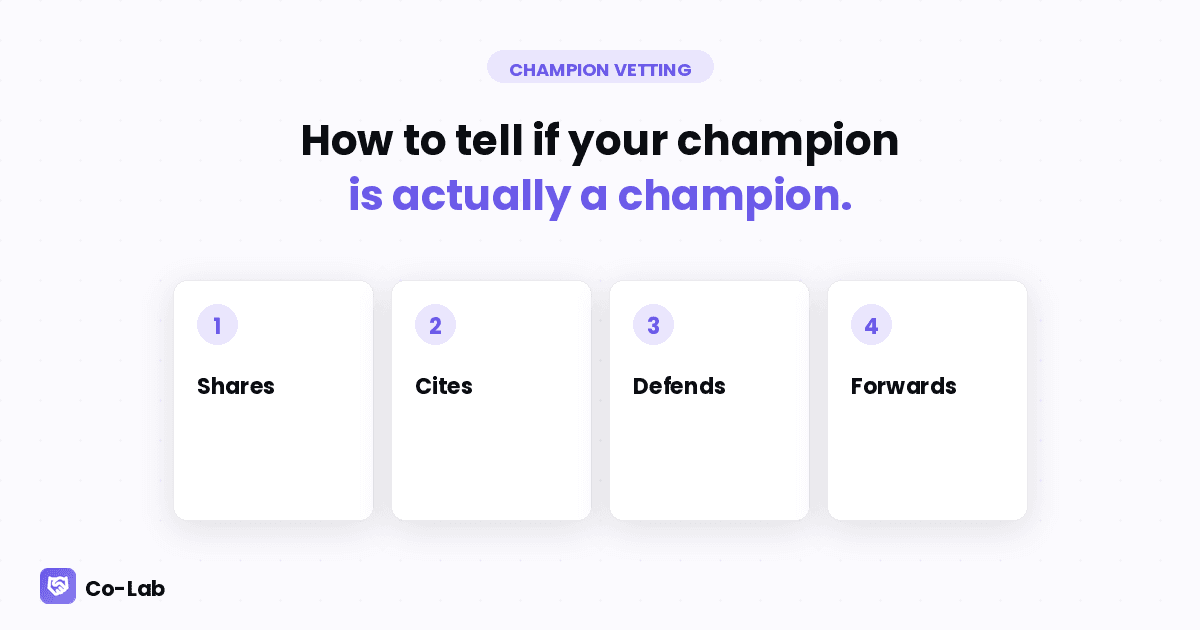
Champion Vetting: How to Tell If Your Internal Advocate Is Real
Four signals that distinguish a real champion from a friendly contact who's about to ghost you.
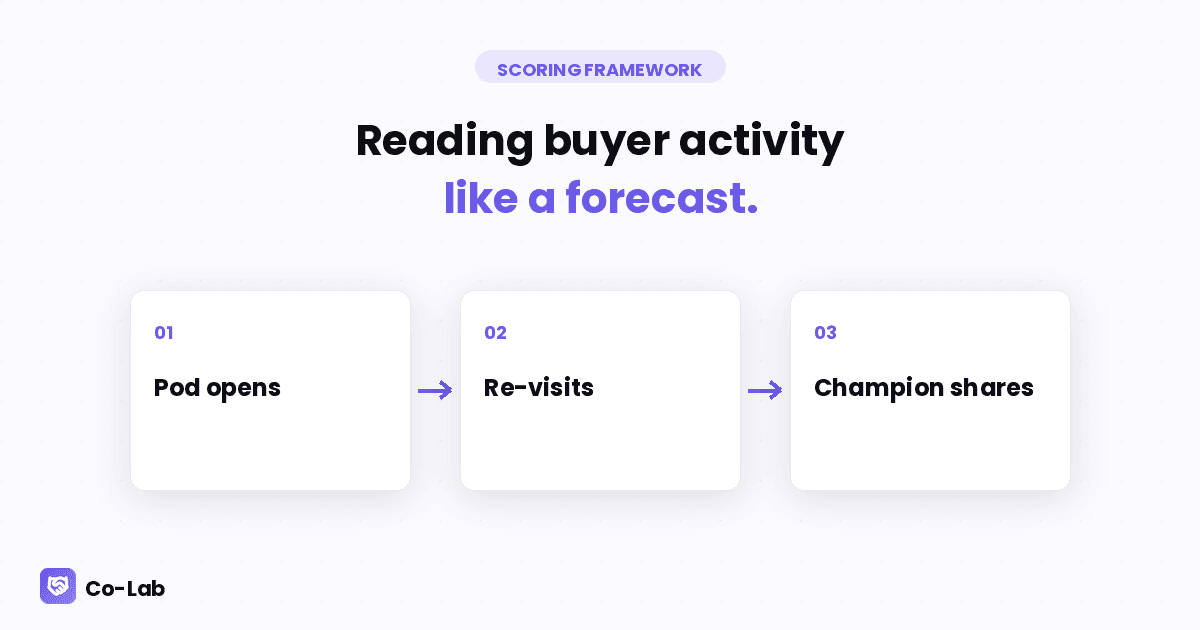
Reading Buyer Activity Like a Forecast
A practical scoring framework for turning engagement data into deal-state insight.
Why Your CRM Misses 80% of the Buyer Journey
The signals living outside Salesforce that predict deals better than anything in it.